Christian K. Anderson, Ph.D.
Connect:
  • Celebrity Professors
  • Richard T. Greener
    • Greener Lecture
  • College Football History
  • Teaching
    • History of Higher Education in America (EDHE 730)
    • Education During Reconstruction
    • Higher Education in Popular Culture
    • History of UofSC
  • Recent Work
  • African American Experience at UofSC
  • Higher Education and the 1918 Pandemic
  • Title IX at USC
Picture
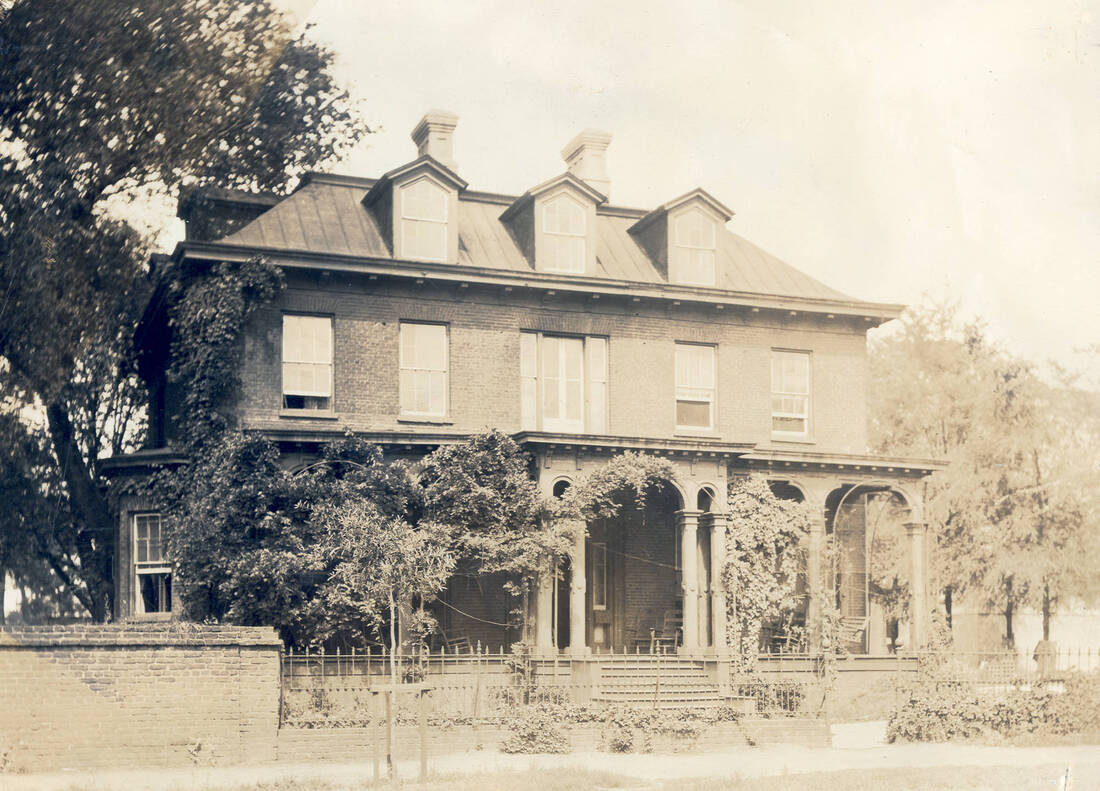
Flinn Hall, c. 1890 (photo from South Caroliniana Library)

Legacies of the UofSC: Exploring the Establishment and Evolution of SC's Flagship University

This course explores the history of the University of South Carolina from its founding in 1801 to the current era with an emphasis on the student experience and on the issue of race. The course will discuss historical trends about the history of higher education generally, for context, but the focus will be on the history of UofSC and its place in the state, nation, and world. 

Open to UofSC Honors Students.

Syllabus & Schedule

SCHC 328-H01
Tuesdays & Thursdays, ​10:05 - 11:20 a.m. in 102 Flinn Hall
Instructor: Christian K. Anderson, Ph.D.
  • Syllabus
  • Class Schedule 

Resources

University of South Carolina History
  • Our History (UofSC Website)
  • History of the Horseshoe (UofSC Website)
  • Presidential Commission on University History
  • Published Histories of UofSC
  • Remembering the Days Podcast
  • The African American Experience at UofSC Tour
  • South Caroliniana Library (Email: [email protected])
  • UofSC Trustees Minutes
  • Daily Gamecock Archives
  • UofSC Research Resources (Dr. Lydia Brandt)

Fall 2023 Events related to USC History
  • From the Past into the Future: Women’s and Gender Studies 50th Anniverary Conference on Friday, September 8, 1:00 – 4:00 p.m. and Saturday, September 9, 9:30 a.m. – 3:30 p.m. (attend at least one panel)
  • ​60th Anniversary of the 1963 Desegregation of the University of South Carolina on Monday, September 11, 9:00 a.m. at McKissick Museum
  • Honoring James Solomon Jr. on Monday, September 11, 10:00 a.m. at LeConte College
  • I Do Not Wish to be a Symbol: A Conversation with Dr. Henrie Monteith Treadwell and Beryl Dakers. Monday, September 11, 
    6:00 - 8:00 p.m. in the Campus Room, Capstone House
  • Roundtable with Neil Kingham and Lewis Burke on researching Francis Cardoza and the history of Reconstruction in South Carolina on Friday, September 15, 12:00 - 1:30, USC, Gambrell Hall, 245B 
  • Richard T. Greener Lecture with Neil Kinghan on Friday, September 15, 4:00 p.m., Euphradian Room, Harper College, room 320
  • Grand Re-opening of South Caroliniana Library on Thursday, October 5, 2:00 - 4:00 p.m.
  • Henry Hayne Day on Saturday, October 7, 2:00 p.m. at Rutledge College
  • Other events can be used for the assignment with instructor approval. 

General Histories of Higher Education
  • John S. Brubacher & Willis Rudy. Higher Education in Transition: A History of American Colleges and Universities (Transaction Publishers, 1958/1997).
  • Arthur M. Cohen & Carrie B. Kisker. The Shaping of American Higher Education: Emergence and Growth of the Contemporary System (Jossey- Bass, 2010).
  • Roger L. Geiger. The History of American Higher Education: Learning and Culture from the Founding to World War II (Princeton University Press, 2015).
  • Roger L. Geiger. American Higher Education since World War II: A History (Princeton University Press, 2019).
  • Philo A. Hutcheson. A People’s History of American Higher Education (Routledge, 2019).
  • Christopher J. Lucas. American Higher Education: A History (Palgrave, 2006).
  • Frederick Rudolph. The American College & University: A History (The University of Georgia Press, 1962/1990).
  • John Thelin. A History of American Higher Education. (3rd Ed.). Baltimore: Johns Hopkins University Press, 2019. (Available on reserve at Cooper Library.)

​History of Education Associations and Journals
  • History of Education Society
  • History of Education Quarterly 
  • Perspectives on the History of Higher Education
  • Organization of Educational Historians
  • American Educational History Journal
  • Southern History of Education Society (SHOES)​

Writing History
​
The best way to understand history is to do history. We do history by conducting research and writing up the results of our investigations. This requires reading published research, asking questions, and then going after the sources that will help us answer these questions. A useful document for helping you analyze archival sources is John Thelin's Guidelines for Analyzing Historical Documents (2014, p. xxi). 
Most historical publications (books, journals, magazines) use the Chicago Manual of Style as the guide for citing sources. The Notes and Bibliography style is easiest for citing primary sources. Most of the books and articles we read for this class use this as the style guide. Chapter 14.229 provides several examples of how to cite primary sources. You can also use this "cheat sheet" I created as an easy reference. Regardless of which citation system you use, properly acknowledging your sources is essential. 
  • Guidelines for Analyzing Historical Documents (From Thelin, 2014, p. xxi)
  • American Historical Association. “Statement on Standards of Professional Conduct.”
A few books and resources that will prove useful for those who wish to dig deeper into historical questions and methods:
  • Thomas Andrews and Flannery Burke, “What Does it Mean to Think Historically?” Perspectives on History (January 2007).
  • Car. N. Degler. “Why Historians Change their Minds,” Pacific Historical Review 45 (May 1976), 167-184.
  • “Doing History” podcast, Season 1 on “How Historians Work” 
  • Marybeth Gasman (ed.), The History of U.S. Higher Education: Methods for Understanding the Past (Routledge, 2010). 
  • Martha C. Howell & Walter Prevenier. From Reliable Sources: An Introduction to Historical Methods (Cornell University Press, 2005).
Proudly powered by Weebly